
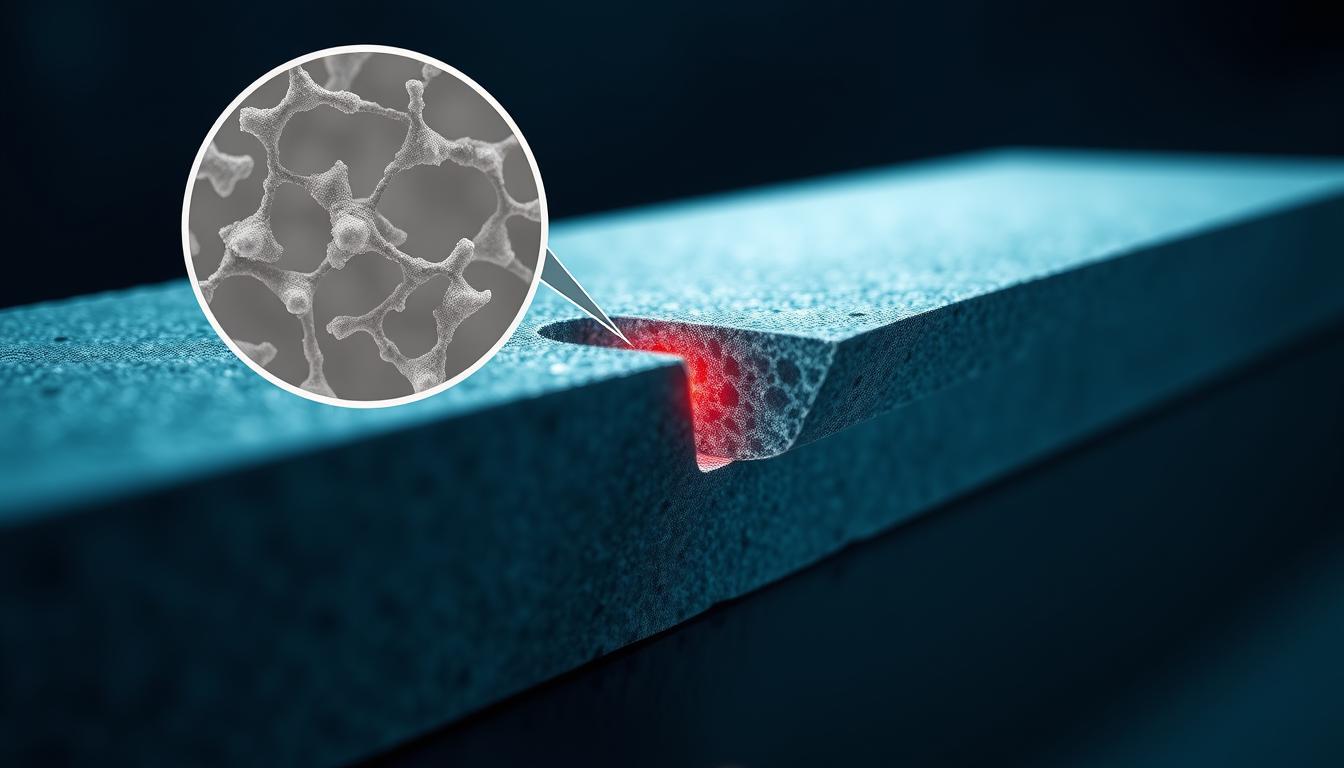
Friction is a key force in our daily lives. It’s the force that stops or slows down objects when they touch. This happens when two surfaces are in contact.
Knowing about the physics of friction is important. It tells us how things move or stay put. Friction affects us in simple tasks like walking or driving, and in how machines work.
Friction might seem like a problem, causing wear and damage. But it’s also essential for doing many things. Without it, we couldn’t hold onto objects or stop cars.
Understanding Friction: The Basics
Friction is the force that happens when two objects rub against each other. It’s all around us, from waking up to going to bed. It’s a key part of our daily lives.
Friction is the resistance of motion when one object rubs against another. There are different types, like dry friction, fluid friction, and rolling friction. Each type affects how objects move differently.
Dry friction happens between solid surfaces that touch, making it hard for them to move. Fluid friction occurs when an object moves through a liquid or gas, facing resistance because of the fluid’s thickness.
Rolling friction is when an object rolls over a surface. It’s weaker than dry friction, making it easier to move heavy things on wheels.
The strength of friction depends on the surfaces touching and the force pushing them together. Knowing this helps us see how important friction is in our world.
Understanding friction basics helps us manage and use friction in many ways. This is true for simple tasks and complex engineering projects.
The Science Behind Friction
Friction is a force that opposes motion between surfaces in contact. It comes from the tiny bumps on surfaces rubbing against each other. This is based on Newton’s Laws of physics.
Newton’s Laws of Motion explain how friction affects objects. The first law says an object stays at rest or moves straight unless a force acts on it. Friction is a force that can slow down or change an object’s direction.
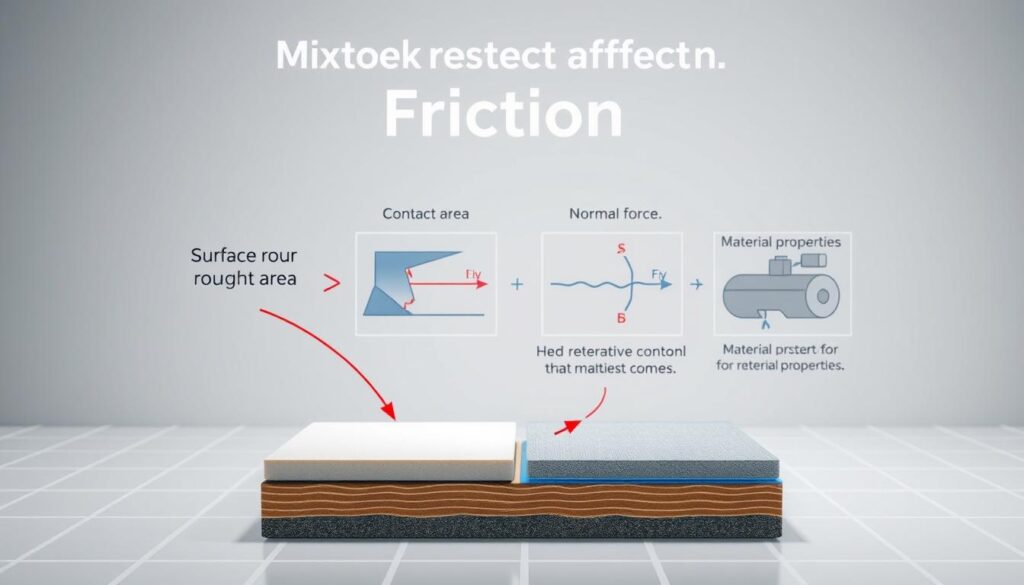
The surface texture greatly affects friction. Rough surfaces have more friction because of the bumps. Smooth surfaces have less friction, making it easier to move them.
Many factors affect friction. These include the surface types, the force pushing them together, and lubricants. Knowing these helps us manage friction in many areas, from machines to everyday items.
Understanding friction’s science helps us see its importance in our lives and technology. It also lets us find ways to control friction when needed.
Everyday Examples of Friction
Friction is everywhere, affecting our daily lives in small but important ways. Everyday friction is something we often don’t even notice.
Walking is a great example of friction at work. It keeps our feet from slipping and lets us move. In sports, friction in sports is key. It helps athletes grip their gear, like tennis rackets or football cleats, so they don’t slip.
Vehicle friction is also vital. Car brakes use friction to stop the car. The friction between brake pads and wheels is a safety example.
Friction is also important in simple tasks. Like writing with a pen or starting a fire by rubbing sticks. In these cases, friction creates the needed force or heat.
Knowing about everyday friction helps us use it better. It improves our performance and safety in many areas of life.
The Positive Side of Friction
Friction is more than just a force that slows things down. It’s key to keeping things stable and in control. This is true in both mechanical systems and our daily lives.
The Importance of Friction for Grip
Friction helps us grip things, which is vital for safety and doing things well. For example, tire treads increase friction with the road. This helps drivers control their vehicles better and lowers accident risks.
Athletes also need friction to hold onto their gear or the ground. This is essential for their performance and staying safe.

Friction is essential for mechanical systems to work right. In braking systems, it helps slow down or stop moving parts. Without enough friction, these systems wouldn’t work, posing safety risks.
Friction and Safety
Friction is a big deal for safety. It stops us from slipping and falling, which can hurt us. It’s also used in safety gear like seatbelts and brakes to absorb energy.
In summary, friction isn’t all bad. It helps with grip, mechanical systems, and safety. By understanding its value, we can design and interact with the world better.
The Negative Impact of Friction
Friction has many bad effects, affecting everything from how much energy we use to how long machines last. It causes energy loss by turning some of the energy into heat. This heat is then lost, making machines less efficient and costing more to run.
In machines, friction in machines is a big problem. It wears down moving parts, leading to maintenance and repair costs. This wear and tear can damage the machine over time, making it less effective.
Friction isn’t just a problem for machines; it affects our daily lives too. For example, friction between tires and the road can make cars use more fuel. It can also cause parts to overheat, leading to serious issues.
To lessen these problems, we need to understand how friction works and find ways to reduce it. By doing this, we can make machines work better, save energy, and extend the life of our equipment.
In summary, while friction has some good sides, its negative effects are huge. By recognizing and tackling these issues, we can make systems more efficient and reduce the harm caused by friction.
Reducing Friction: Techniques and Tools
Reducing friction is key to making mechanical systems work better and last longer. One top way to do this is through lubrication. It greatly cuts down friction between moving parts.
Lubrication creates a thin layer of lubricant between surfaces. This reduces direct contact and wear. Depending on the job and environment, oils or greases are used.
Using smooth surfaces is another effective method. Polishing or coating surfaces lowers friction. This is very helpful in precise engineering where little friction is needed.
Advanced materials also help in reducing friction. Materials like Teflon and certain polymers have low friction. They’re used in many things, from cookware to big machines.
“The use of advanced materials and surface treatments can significantly reduce friction, leading to increased efficiency and reduced maintenance costs in mechanical systems.”
Other methods, like coatings and surface texturing, are being looked into to cut friction even more. These new ideas are important for making tech more efficient and green.
By using these techniques, industries can make their equipment work better and last longer. This saves money and helps the environment.
Friction in Nature
The natural world shows us how friction works, from how animals move to big events like landslides. Friction is key in animal movement, seed dispersal by plants, and even in natural disasters.
Animals need friction to move well. For example, the friction between their feet and the ground helps them run, jump, or climb. Without enough friction, animals would slip and find it hard to move. The surface’s texture, whether it’s rough or smooth, changes how much friction animals get.
Friction is also important for plants. Seeds often stick to animals or clothes because of friction. This helps seeds spread and increases plant diversity.
Friction also affects natural disasters. For example, landslides happen when gravity overcomes the friction holding rocks and soil in place.
“Friction is a critical factor in the stability of slopes, and its reduction can lead to catastrophic events.”
Knowing how friction works in these events helps us predict and lessen their impact.
In short, friction is everywhere in nature, from tiny movements to big events. It plays a big role in how animals and plants move and in natural disasters. This shows how important friction is.
Measuring Friction
Friction is a key force that needs precise measurement. The coefficient of friction is vital in understanding friction. It shows the ratio of friction force to the force pressing two bodies together.
Measuring friction uses different methods and tools. For example, static friction stops an object from moving. Kinetic friction happens when an object is moving.
The coefficient of friction is a number that shows how surfaces interact. It helps figure out the force needed to start or keep motion between surfaces.
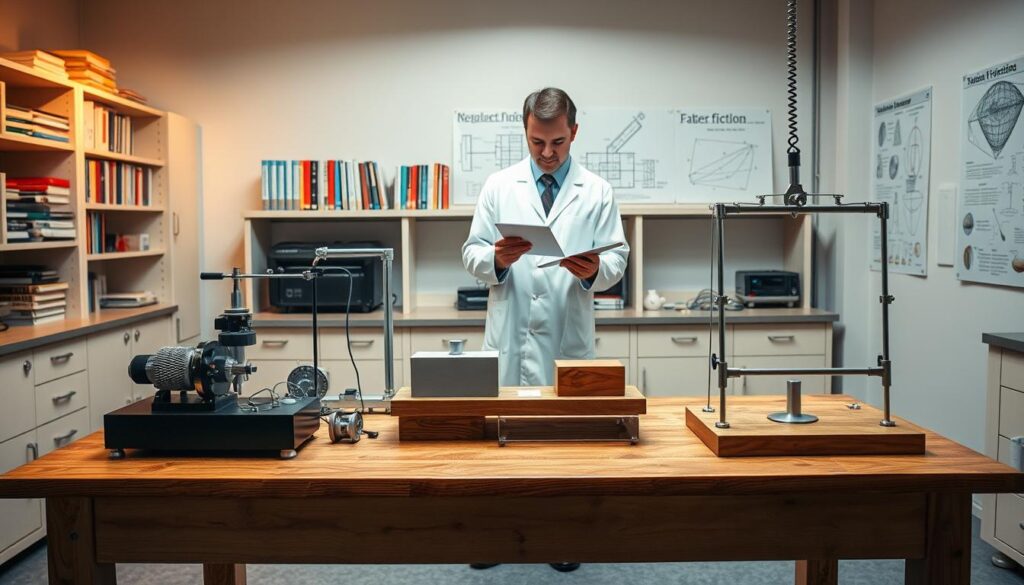
Friction measurement tools vary from simple to advanced. They help in many fields like manufacturing and aerospace. These tools improve performance, safety, and efficiency.
Knowing how to measure friction well is key. It helps in designing better systems and predicting wear. By understanding friction, we can make materials and technologies that work better and safer.
The Role of Friction in Technology
Friction has a big impact on technology, affecting electronics, aerospace, and robotics. It can be both a problem and a solution, depending on how it’s used.
In electronics, friction is key for devices to work right. It helps connect and disconnect parts. But too much friction can damage devices. To fix this, makers use special methods to control friction, keeping devices working well.
The aerospace field also sees friction’s effects. It changes how planes and spaceships work, affecting their fuel use, safety, and success. For example, friction during takeoff and landing can make things very hot, needing special materials to handle the heat.
In robotics, controlling friction is vital for robots to move smoothly and accurately. Too much friction uses more energy and makes robots less precise. Too little can cause them to slip and lose control. To solve this, engineers use lubricants and special surface treatments to get the right amount of friction.
Getting friction right is key to making technology better. By managing friction well, creators can make systems that are more efficient, reliable, and advanced in many fields.
Friction in Engineering
Engineers must think about friction when they design new projects. Friction affects how well things work and how long they last. It’s key for the strength and function of projects like bridges, buildings, and machines.
Designing for friction means knowing how materials interact. In building structures, friction helps keep things stable. It spreads out loads and fights against forces like wind or earthquakes.
Choosing the right materials is also important. Different materials have different friction levels. For example, high friction materials are used where grip is needed, like in road surfaces or brake pads.
Managing friction in engineering is not just about reducing it. It’s also about making it work better for specific needs. For instance, more friction is good in clutches or brakes for better safety and performance.
Advances in materials science and technology have given engineers many options for friction management. New materials and treatments can change how much friction a part has. This leads to more efficient and reliable designs.
In summary, friction is a big deal in engineering. It shapes design choices, material picks, and the performance of structures and machines. By understanding and managing friction, engineers can make projects safer, more efficient, and longer-lasting.
The Future of Friction Management
Advances in friction reduction and sustainable practices are changing the future of friction management. As technology grows, reducing friction will become more critical. It will help make things more efficient and kinder to the environment.
The study of friction, wear, and lubrication, called tribology, is leading this change. Researchers are finding new materials and methods to cut down friction. This will make machines work better and last longer.
Sustainable practices are also key in the future of friction management. Using green lubricants and materials helps industries be more eco-friendly. They can keep their efficiency high while being better for the planet.
Nanotechnology and advanced coatings are being looked into to reduce friction. These innovations could change many industries. They could make things like cars and planes more energy-efficient and less prone to wear.
Looking ahead, combining sustainable practices with tribological advancements is essential. By doing this, we can make systems more efficient, sustainable, and reliable. This will help us build a better future.
Conclusion: Embracing Friction
Friction is a force we all deal with every day. It can slow us down or help us move. It affects how we walk and how machines work.
Friction is important because it can stop or help things move. It’s key in many industries. Managing friction is essential for things to work well.
As we learn more about friction, we can create new technologies. This will lead to more ideas and progress in this area.