
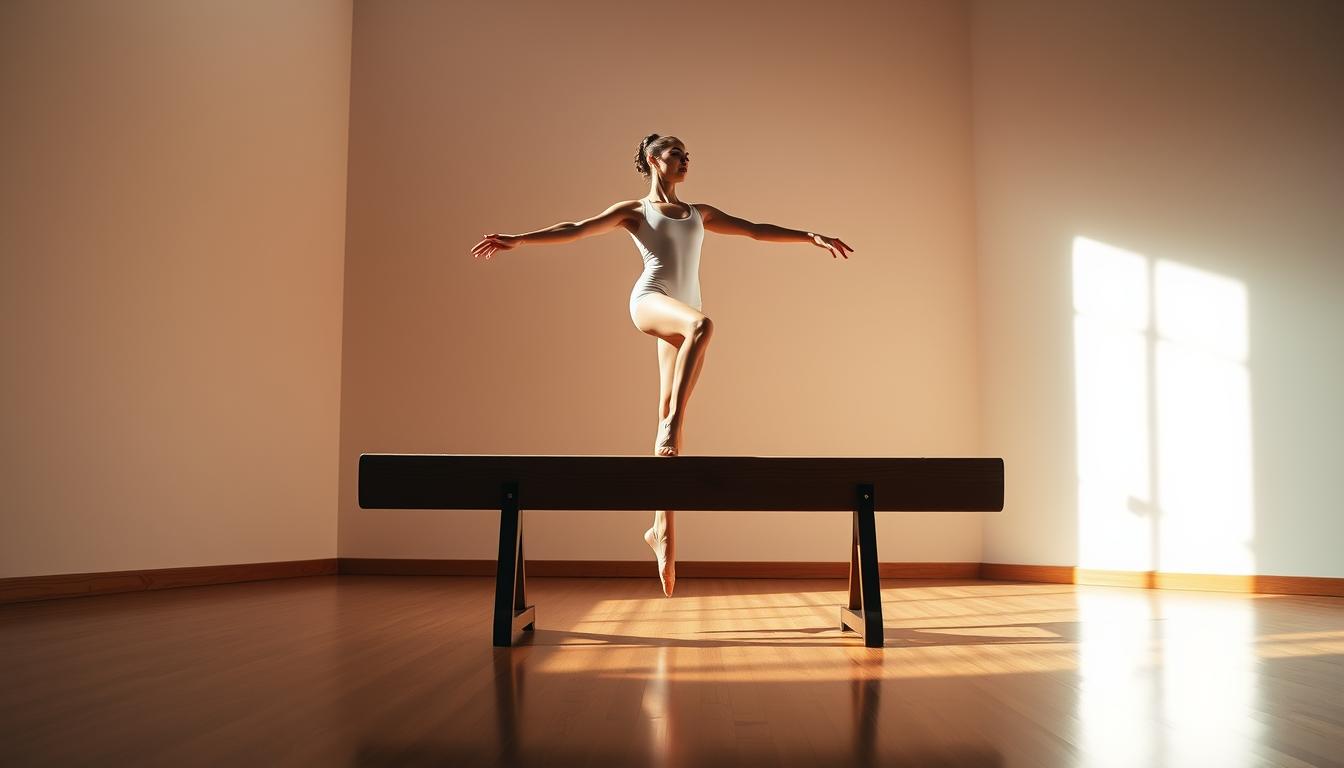
Developing gross motor skills is key for staying fit and coordinated. Practicing activities that test balance and coordination is a great way to do this. Walking on a line, similar to a balance beam, is a top exercise for these skills.
Using a balance beam in therapy and daily life offers many benefits. It builds the skills and confidence needed for harder physical tasks. Adding balance beams to your routine boosts gross motor skills and fitness.
Activities that boost balance and coordination can greatly improve gross motor skills. This leads to better physical fitness and lowers injury risk.
Introduction to the Balance Beam
A balance beam is great for improving gross motor skills. It’s a long, narrow beam, often raised, used in gymnastics and physical therapy.
In physical therapy, balance beams are very useful. They offer a safe space to work on balance and coordination. Physical therapists use them to help patients recover or manage balance issues.
Balance beams are also key for gross motor development in kids and athletes. They boost physical fitness by improving balance, coordination, and motor planning. Regular use can greatly enhance physical ability.
Balance beams are also very flexible. They can be set up at different heights and widths. This makes them perfect for everyone, from pro gymnasts to those in rehab.
Knowing how balance beams help, we see their value in therapy and training. They’re great for improving physical skills and health, whether in a gym or at home.
Types of Balance Beams
The world of balance beams is full of choices. You can find everything from store-bought to homemade options. This variety lets people pick the perfect balance beam for their needs.
Store-bought balance beams come in many sizes and materials. They’re great for gymnastics and dance training. They offer a solid surface for practicing balance and coordination.
If you like making things yourself or are on a tight budget, homemade balance beams are a good choice. You can make them from wood or metal. This lets you design and size them just right.
Using Tape Lines as Balance Beams
Another way to practice balance is with a tape line as a balance beam. A tape line is cheap and easy to set up on any flat surface. It’s perfect for home use or when you can’t have a real balance beam.
Tape lines help with balance exercises. They’re also great for beginners. They help you get used to balancing on a narrow surface.
Benefits of Using a Balance Beam
Using a balance beam can greatly improve your physical coordination and balance. It’s a great addition to any exercise routine. It helps boost your gross motor skills.
The balance beam is a versatile tool that makes you work on keeping your balance. This improves your stability and coordination. Regular use can also enhance your motor planning, helping you move with more precision.
One major advantage of balance beams is they help develop gross motor skills. These skills involve big muscle groups and are key for walking, running, and jumping. Practicing on a balance beam can make these movements better, improving your physical fitness.
Balance beams aren’t just for gymnasts or athletes; they’re good for everyone. Kids can use them to play and improve their gross motor skills. Adults can use them to challenge their balance and coordination, which can lower the risk of falls and injuries.
Practicing on a balance beam also boosts your focus and concentration. The challenge of staying balanced requires your full attention. This can improve your cognitive flexibility and discipline.
Techniques for Walking on a Balance Beam
Walking on a balance beam is all about balance, focus, and practice. First, you need to learn the basic techniques. These skills help you move confidently on the beam.
Keeping your balance is key. You must keep your center of gravity right over the beam. Your feet should be placed for the best stability. Proper posture is also important, with your head up, shoulders relaxed, and core tight.
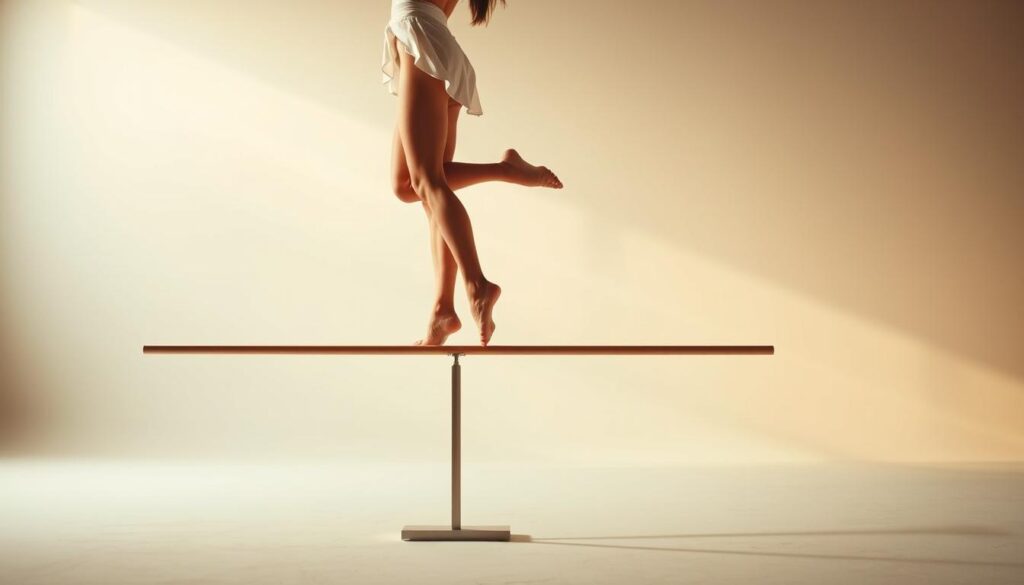
After mastering basic walking, try walking backwards and sideways. Walking backwards needs good spatial awareness and trust in your body. Take small steps and keep your knees bent to lower your center of gravity.
Sideways walking is another skill that improves balance and coordination. It also boosts your gross motor skills. This involves moving your weight onto one foot and then bringing the other foot to meet it, keeping your posture steady.
Adding these techniques to your practice will boost your balance beam skills. Regular practice builds strength, flexibility, and confidence. This lets you do more complex movements easily.
To get even better, try different walking styles, like changing your pace or adding turns. This makes your practice sessions more fun and challenging.
Exercises to Master Balance Beam Skills
Balance beam skills can be honed through specific exercises that improve balance and coordination.
To master the balance beam, it’s essential to incorporate a variety of exercises into your training routine. These exercises should focus on improving gross motor skills, balance, and overall physical fitness.
Some effective exercises include single-leg squats, balance poses, and walking along a straight line. These exercises help improve balance and stability, which are key for balance beam performance.
Practicing movements that challenge your balance and coordination is also beneficial. Standing on different surfaces or using a BOSU ball can help. Adding these exercises to your routine can greatly improve your balance beam skills.
Remember, consistent practice and patience are key. By dedicating time to these exercises and gradually increasing the difficulty, you can enhance your balance beam skills and athletic performance.
Choosing the Right Balance Beam
Choosing the right balance beam is key for good practice. Balance beams are vital in gymnastics for training and competitions. You need to think about a few things when picking one.
Size and Dimensions matter a lot. The beam’s length, width, and height impact the skills you can do. Competition beams are usually 16.4 feet long and 4 inches wide. But, there are many sizes for home or gym use, depending on your space and needs.
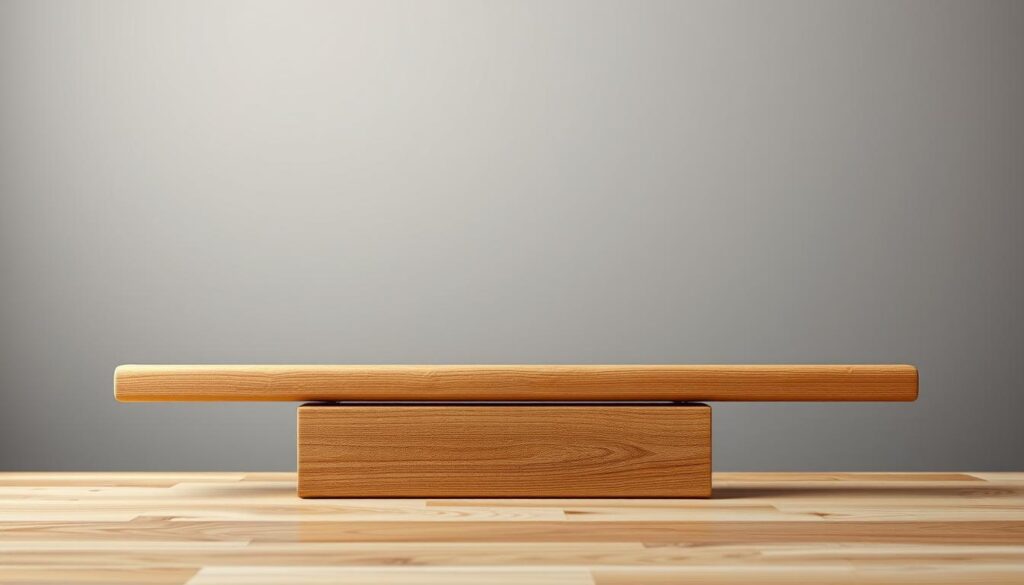
The material of the beam is also important. Beams can be wood, synthetic, or a mix. Wooden beams feel traditional, while synthetic ones are durable and easy to care for. The texture and padding affect how well you perform and stay safe.
Safety Features are a must when picking a beam. Look for beams with non-slip surfaces, strong frames, and adjustable heights. Some beams have padded surfaces or soft landing areas to lower injury risk.
Think about your needs when choosing a beam. Consider the space you have, your skill level, and what training you’ll do. By looking at these factors, you can find a beam that fits your needs and is safe and effective.
Safety Tips for Balance Beam Practice
To enjoy the benefits of balance beam practice, it’s important to follow essential safety guidelines. Practicing on a balance beam can be challenging. Safety should always be the top priority to prevent accidents and injuries.
One of the key safety tips is to ensure the balance beam is properly installed and secured. This includes checking that the beam is level and stable before each use. The area around the beam should also be clear of any obstacles or hazards that could cause tripping or falling.
It’s also important to warm up before starting your balance beam practice. This can include light cardio and stretching exercises to prepare your muscles. Practicing with a spotter or coach, even for beginners, can significantly reduce the risk of injury.
By following these safety tips and being mindful of your body’s limitations, you can minimize the risk of injury. This way, you can enjoy a safe and effective balance beam practice. Injury prevention is key to a successful experience.
Training Programs for Balance Beam Enthuisiasts
To master the balance beam, you need a training plan that fits your needs and goals. A good training program boosts your performance and helps you reach your fitness targets.
Custom training programs are great because they meet your unique needs and goals. They help you focus on specific skills or areas to improve faster on the balance beam.
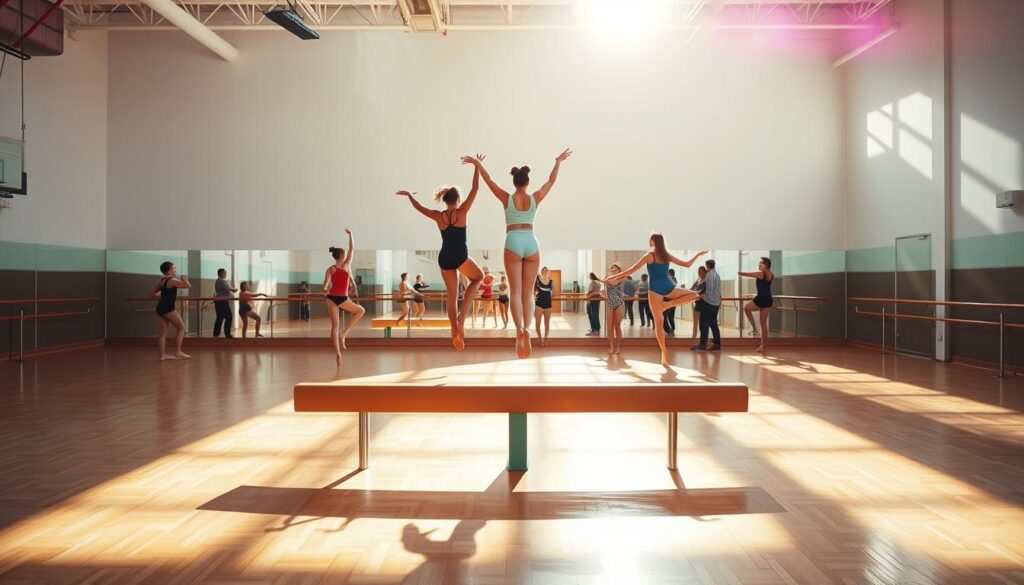
When making a training program, think about your skill level, goals, and how much time you have to practice. A good plan mixes skill work, strength training, and flexibility exercises. This mix improves your performance on the balance beam.
Tips for an effective training program: First, assess your current skills and set achievable goals. Then, slowly make your training harder. Regularly check and tweak your plan to stay on track and meet your fitness goals.
With a tailored and structured training program, balance beam fans can get better, boost their fitness, and enjoy their practice more.
The Role of Coaches in Balance Beam Training
In balance beam training, coaches are more than just teachers. They are mentors who offer vital feedback and support. They play a key role in technical guidance, psychological support, and ensuring safety.
Good coaching on the balance beam requires a deep understanding of gymnastics. Coaches must be able to analyze performances and communicate corrections well. They break down complex movements into simpler parts, helping athletes master each step before combining them.
Guidance is key in balance beam coaching. Coaches give athletes the feedback they need to get better. This includes adjusting body positioning, improving spatial awareness, and perfecting dismounts. Each athlete gets support tailored to their needs, helping them progress in their training.
A qualified coach can greatly boost an athlete’s confidence and performance. They offer constructive feedback and encouragement. This helps athletes overcome fears and build confidence, which is vital for complex routines.
Coaches also ensure safety during training. They spot athletes, teach them to fall safely, and use methods that reduce injury risk. This is essential for a safe training environment.
In summary, coaches are vital in balance beam training. Their expertise, guidance, and support are essential for athletes to improve and succeed in gymnastics. Working with a qualified coach can enhance performance, build confidence, and make training safer.
Fun Activities Using a Balance Beam
Using a balance beam can be a fun and engaging way to improve balance, coordination, and overall gross motor skills. Games and challenges can make balance beam practice more enjoyable. They help individuals stay motivated.
Some fun activities to try on a balance beam include timed walks, obstacle courses, and balance challenges. For example, individuals can try walking along the beam with their eyes closed or while performing a specific task, such as tossing a ball or catching a beanbag.
Games like “Follow the Leader” or “Simon Says” can also be adapted to incorporate balance beam activities. This makes practice more engaging and interactive. Setting up a balance beam course with different challenges and obstacles can provide a fun and varied workout.
By incorporating fun activities and games into balance beam practice, individuals can stay engaged and motivated. They improve their balance and coordination skills. Whether used in a fitness or recreational setting, a balance beam is a valuable tool for promoting physical activity and overall well-being.