
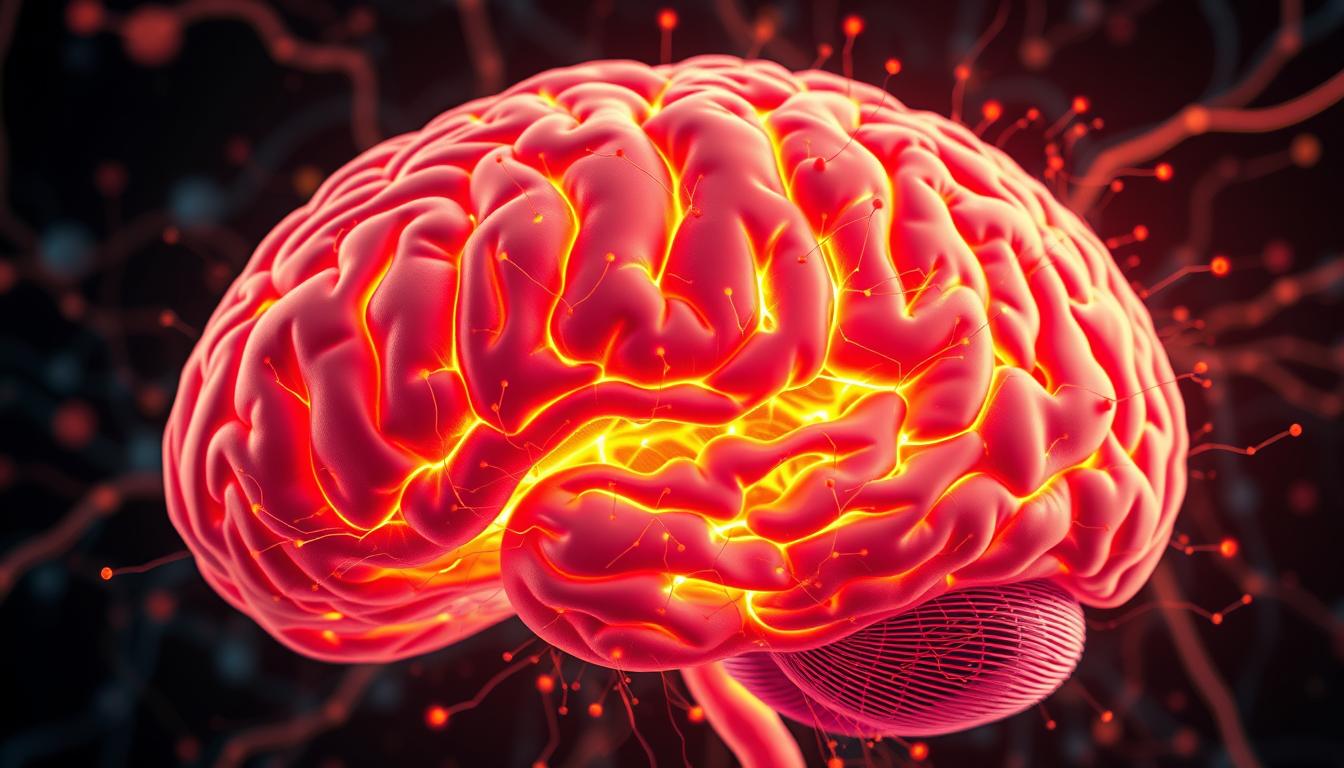
The human body’s control center is a complex and fascinating organ. It controls cognitive functions like thought, memory, and emotion. It also regulates physical movements and vital processes.
Along with the spinal cord, it makes up the central nervous system. This system oversees functions like movement, sensation, brain function, and emotional responses.
This complex system lets us interact with the world. It’s essential for our daily lives. Knowing its importance helps us keep it healthy and work better.
Understanding the Structure of the Brain
The brain is made up of several key areas, each with its own job. It has three main parts: the cerebrum, cerebellum, and brainstem.
The cerebrum is the biggest part of the brain. It handles sensory information, controls movement, and manages thinking, emotions, and memory. It has two sides: left and right, each doing different things.
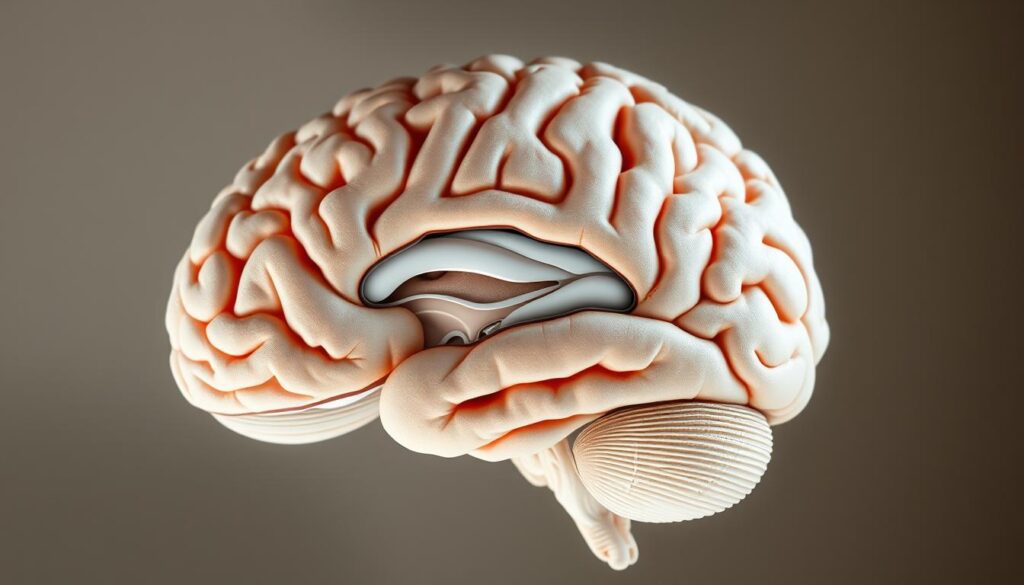
The cerebellum is at the brain’s back. It helps with movements like balance, posture, and speech. This makes our movements smooth and balanced.
The brainstem links the cerebrum to the spinal cord. It controls automatic functions like breathing, heart rate, and blood pressure. It’s made of the midbrain, pons, and medulla oblongata.
Knowing how the brain structure works helps us understand its functions. From simple movements to complex thinking, it all happens thanks to these parts working together.
How the Brain Processes Information
The brain’s ability to process information comes from the work of neurons and neurotransmitters. This complex process lets us see, understand, and react to different things around us.
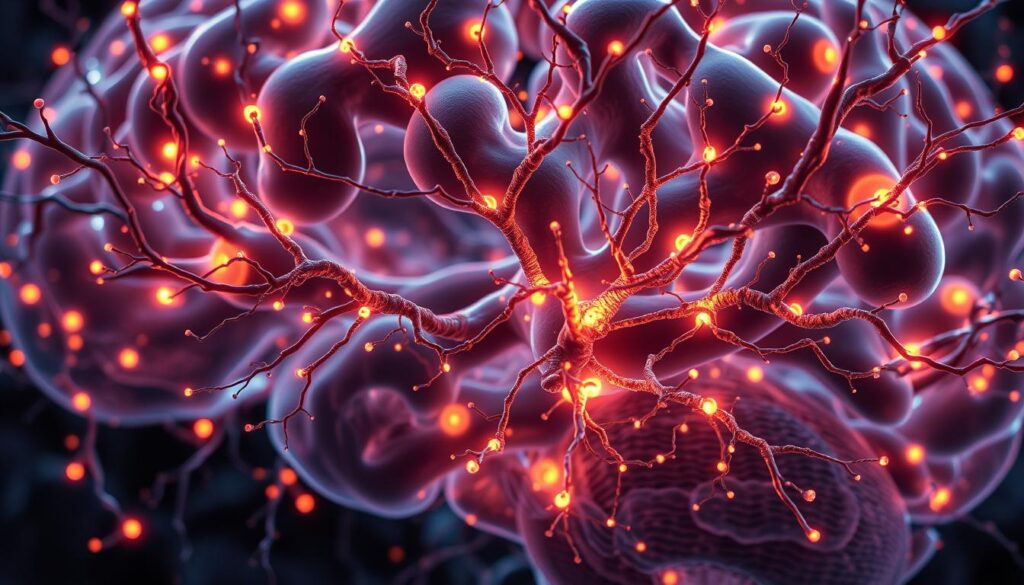
Neurons are special cells that handle information. They send and receive signals through electrical and chemical ways. They are key to how our brain and nervous system work.
Synaptic Transmission
Synaptic transmission is how neurons talk to each other. It happens when neurotransmitters are released from one neuron. These then connect to receptors on nearby neurons, helping signals move along.
This detailed process is vital for things like learning, remembering, and making choices. How well synaptic transmission works affects how well we can handle information.
To sum up, the brain’s skill in processing information depends a lot on neurons and neurotransmitters. Learning about synaptic transmission helps us understand how the brain works.
The Brain and Emotions
The connection between the brain and emotions is truly fascinating. Emotions are complex states that affect our behavior and happiness. The limbic system, with parts like the amygdala and hippocampus, is key in handling emotions.
The limbic system is essential for processing emotions. The amygdala helps figure out the emotional value of what we sense. The hippocampus, in turn, helps create and keep memories linked to emotions. This shows how the brain handles emotions in a detailed way.
Emotional processing is more than just reacting to things. It’s about understanding and making sense of our feelings. The brain’s skill in processing emotions helps us empathize, connect with others, and make choices. Knowing this helps us understand why we act differently when we’re feeling certain ways.
The role of the limbic system in emotional processing shows emotions have a biological basis. It’s not just about feeling; it’s about how these feelings are processed in the brain and affect our actions. Understanding this is key to managing our emotions better.
By understanding the brain’s role in emotional processing, we can see how emotions and thinking work together. This knowledge helps us find better ways to manage our mental health and improve our overall happiness.
The Brain’s Role in Motor Control
The cerebellum is key in motor control, making our movements smooth and precise. It coordinates voluntary movements like walking, talking, and writing. It does this by combining information from different sensory systems.
The cerebellum starts by getting inputs from sensory receptors all over the body. These receptors tell us about our limbs’ position and movement, and our posture. Then, the cerebellum fine-tunes our movements, adjusting as needed to keep us balanced and coordinated.
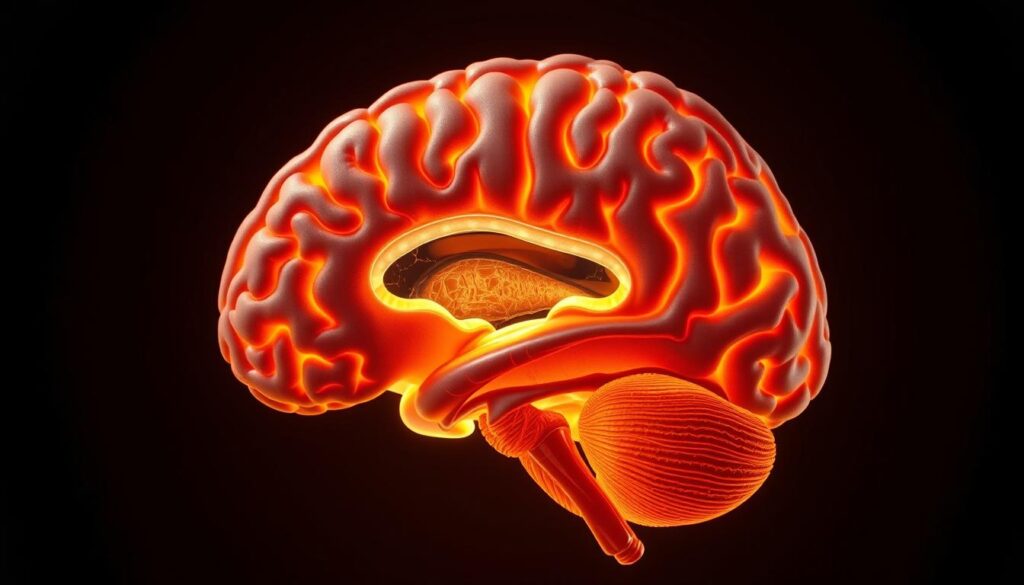
The cerebellum makes sure our movements are smooth and efficient. It compares what we plan to do (from the motor cortex) with what actually happens (from sensory receptors). If there’s a difference, the cerebellum corrects it by sending signals to the muscles for precise motor skills.
Dr. Eric Kandel, a Nobel laureate in Physiology or Medicine, noted, “The cerebellum is vital for coordinating and regulating movements. Its problems can cause big motor issues.” This shows how important the cerebellum is for doing everyday tasks easily and accurately.
“The cerebellum is involved in the regulation of motor movements, and its role is critical in learning new motor activities.”
In short, the cerebellum is essential for motor control. It lets us do many activities with precision and coordination. Its job in combining sensory info and adjusting motor responses is key for balance, posture, and smooth voluntary movements.
Neuroplasticity: The Brain’s Adaptability
Neuroplasticity is the brain’s amazing ability to change and form new neural connections throughout life. This is key for learning new things and getting better after brain injuries.
It shows that the brain can change and adapt with new experiences and environments. This idea challenges the old belief that the brain stops changing after a certain age.
Neuroplasticity plays a big role in recovery from brain injuries. If some brain parts get damaged, other areas can make new connections. This helps bring back lost functions.
It also helps with learning and memory. When we learn something new, our brain makes new paths and strengthens old ones. This makes it easier to remember and use what we’ve learned.
The brain’s ability to adapt is ongoing, not just for certain ages. This means people can get better at thinking and recover from injuries at any time, with the right help.
Learning about neuroplasticity opens up new ways to treat brain disorders and boost thinking skills. It shows how important it is to keep learning and how our brains can always change and adapt.
The Brain and Sleep
When we sleep, our brain changes a lot. It’s not just a time to rest; it’s when our brain works hard to stay healthy. This is key for our brain’s health.
The brain goes through different sleep stages, like REM and non-REM sleep. Each stage is important for our brain. Non-REM sleep helps our body recover. REM sleep helps us remember things and manage our feelings.
Sleep cycles are essential for a healthy brain. A full cycle lasts about 90 minutes. It includes both non-REM and REM sleep. These cycles keep happening all night, helping our brain get better.
Sleep is very important for our brain. It helps us focus, remember things, and make good choices. It also helps us control our emotions. Not getting enough sleep can lead to mood problems.
In short, sleep is closely tied to brain health. Understanding this is key to keeping our brain working well. By valuing sleep, we can improve our overall health.
Nutrition and Brain Function
Nutrition greatly affects how well our brain works. Eating foods rich in essential nutrients helps keep our brain healthy and working at its best.
The brain needs nutrients all the time to work right. Omega-3 fatty acids, found in salmon and walnuts, are key for brain health. They help build and support brain cells.
Antioxidants in fruits, veggies, and nuts protect the brain from damage. Dr. David Perlmutter says, “The food you eat can be the safest medicine or the slowest poison.” This shows how important what we eat is for our brain.
“You are what you eat” is more than just a saying; it reflects the significant impact of nutrition on our overall health, including brain function. A balanced diet is key to maintaining cognitive well-being.
Other important nutrients like vitamin D, B vitamins, and magnesium are also vital for the brain. They help with making neurotransmitters and keeping neurons healthy.
Eating well not only helps our brain but also helps prevent it from getting worse. By choosing the right foods, we can help keep our brain healthy.
In conclusion, nutrition is key to brain health. Knowing about important nutrients and eating them helps our brain function and overall health.
Mental Health and the Brain
Understanding how mental health works in the brain is key to finding good treatments. Conditions like depression and anxiety change how our brains work and look.
Mental health conditions really affect a person’s life. Studies show they change brain areas and systems. This impacts how we feel, think, and act.
For example, people with depression have different brain activity. This is in areas like the amygdala and prefrontal cortex, which handle emotions. Anxiety disorders also show changes in brain areas that deal with fear and anxiety.
“The brain is the most complex organ in the human body, and its intricacies are deeply connected to our mental health.”
Knowing these changes helps us create better treatments. By finding out which brain areas are affected, we can make treatments like medicines and therapy more effective.
This research is very important. The World Health Organization says mental health issues are a big cause of disability worldwide. By learning more about the brain and mental health, we can help people live better lives.
Effective treatments need more research into how mental health and the brain interact. We must keep exploring new ways to help and understand the brain’s role in mental health.
The Future of Brain Research
Neurotechnology and brain research are making big strides. We’re learning more about the brain every day. This research aims to find new treatments for brain diseases and boost our thinking skills.
Looking ahead, brain research will lead to major discoveries. Neurotechnology could change how we treat brain disorders. Scientists are on the verge of finding new ways to help the brain.
The future looks bright for brain research. We’ll see big advances in neurotechnology and understanding the brain. This could lead to better health and smarter thinking.