Improving indoor air quality is key for a healthier home. The Asthma and Allergy Foundation says the top things to look for in an air purifier are room size, certifications, and filter types.
Indoor pollutants and allergens can make breathing harder and cause allergies. A good air purifier can get rid of these harmful things. This makes the air cleaner and safer to breathe.
It’s important to pick the right air purifier for your space. Look at room size and filter type. This way, you can make your indoor air quality better. Your home will be safer and more comfortable.
What is an Air Purifier?
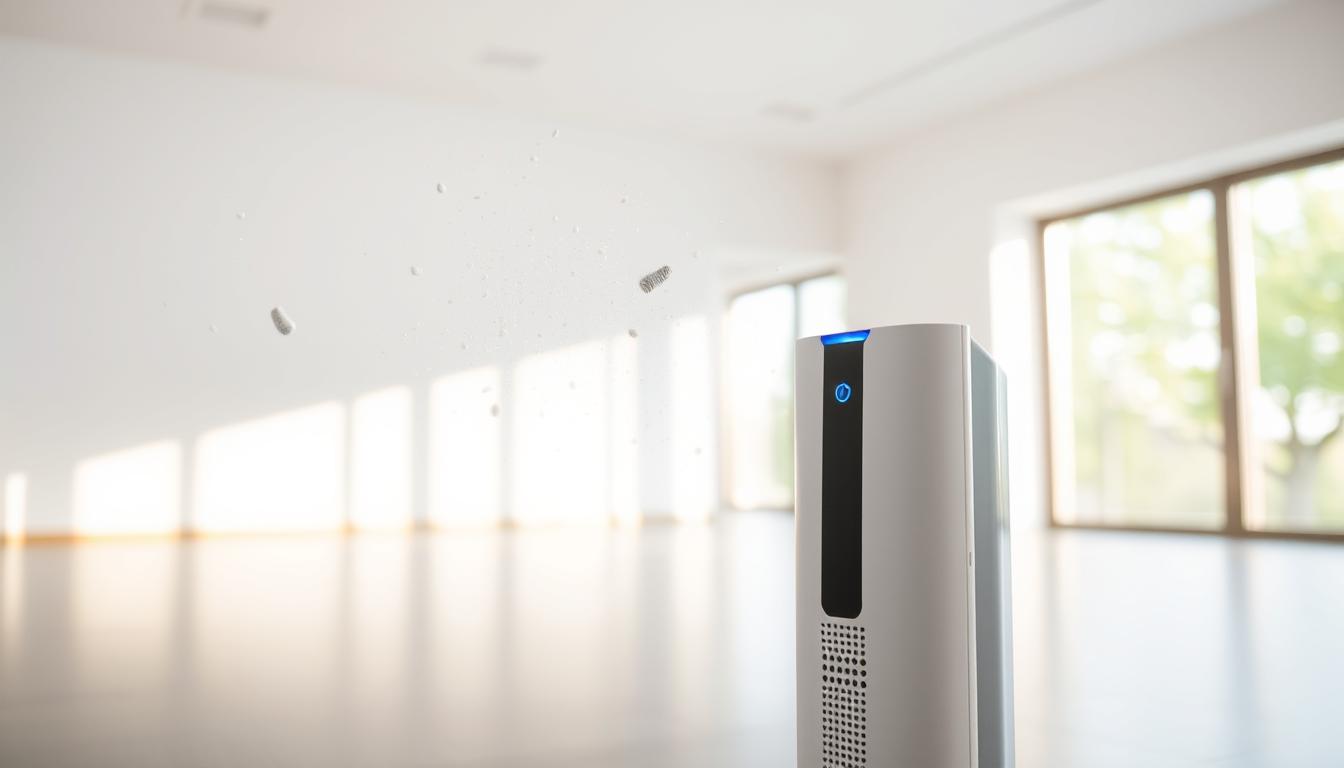
An air purifier is a device that cleans the air in a room or area. It helps make the air healthier to breathe. This is important for improving indoor air quality.
These devices can catch many pollutants, like dust, pollen, smoke, and pet dander. The HEPA (High Efficiency Particulate Air) filter is a key technology in many air purifiers. HEPA filters can trap 99.97% of particles as small as 0.3 microns.
The CADR (Clean Air Delivery Rate) is also important. CADR shows how much air a purifier can clean in a minute. A higher CADR means the air purifier works better, which is key when choosing one for your home or office.
Knowing how an air purifier works helps you pick the right one. Look for HEPA filtration and a high CADR. This way, you can find an air purifier that really improves your air quality.
Benefits of Using an Air Purifier
Air purifiers have many benefits, like cutting down on allergens and pollutants. They greatly improve indoor air quality. This is key for a healthy home.
They remove pollutants and allergens from the air. This helps people with respiratory issues like asthma. It’s also good for those with allergies, as it lowers their exposure to irritants.
Reducing Allergens and Pollutants
Air purifiers have filters that catch dust, pollen, and pet dander. They reduce the amount of these allergens in the air. This makes homes more comfortable for people with sensitivities.
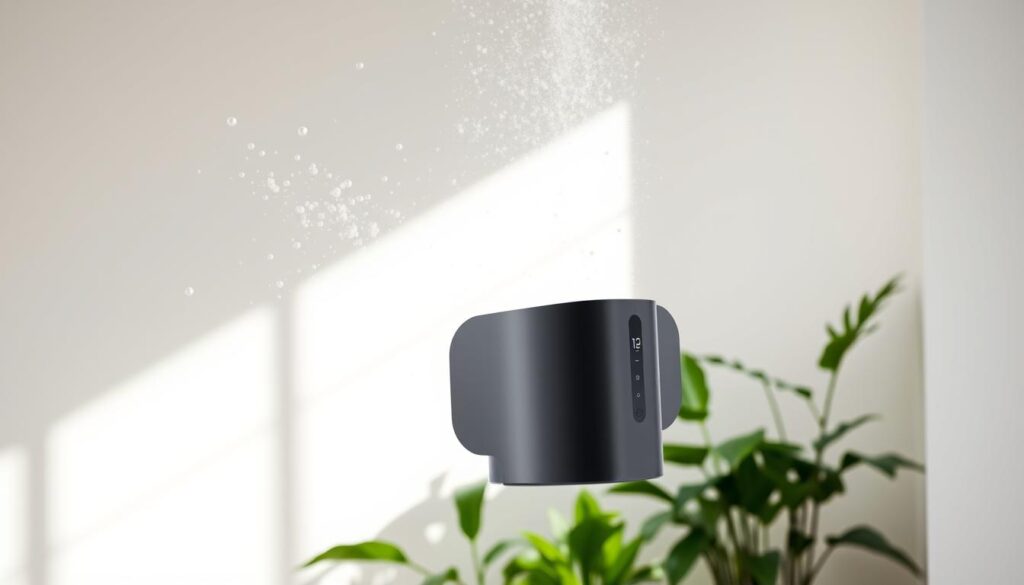
The success of an air purifier depends on the filter type and coverage area. HEPA filters, for example, are great at catching small particles. They’re known for improving indoor air quality.
Adding an air purifier to your home can greatly improve the air you breathe. It makes your living space healthier and more comfortable.
Types of Air Purifiers
There are many types of air purifiers, each with its own benefits. The right one depends on what air quality issues you face.
HEPA Air Purifiers are top-notch for getting rid of airborne particles. HEPA means High Efficiency Particulate Air. These filters catch 99.97% of particles as small as 0.3 microns, like dust and pollen.
Activated Carbon Air Purifiers are great for removing smells and VOCs. Activated carbon absorbs gases and odors well. This makes them perfect for homes with pets or smokers.
Other air purifiers include UV models that kill bacteria and viruses with ultraviolet light. There are also ionizers that release negative ions to trap particles.
When picking an air purifier, think about what you need. For allergies, a HEPA air purifier is a good pick. For smells or VOCs, an activated carbon air purifier is better.
How to Choose the Right Air Purifier
Choosing an air purifier can be tricky with so many options. It’s important to think about a few key things. The air purifier’s fit for your space is a big deal.
Understanding Room Size
The size of your room matters a lot. Air purifiers work best in rooms of certain sizes. If your room is too big for the purifier, it won’t clean the air well.
Room Size and CADR
When picking an air purifier, knowing about room size and CADR (Clean Air Delivery Rate) is key. CADR shows how well an air purifier cleans the air. A higher CADR means it can handle bigger spaces or more pollution.
“The CADR is a critical metric because it tells you how well an air purifier can clean the air in a given space.” Make sure the CADR of your air purifier matches or beats your room’s square footage.
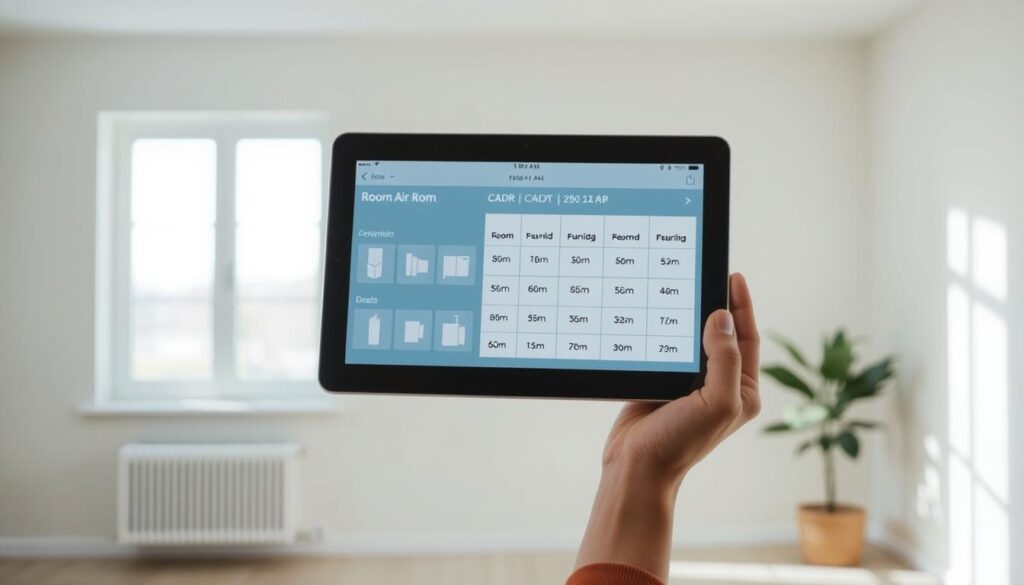
For example, a 200 square-foot room needs an air purifier with at least a 200 CADR. But if your area has a lot of pollution, you might need a higher CADR air purifier.
“Air purifiers are not one-size-fits-all solutions. The right choice depends on various factors including room size, pollution levels, and specific needs like allergy sufferers or pet owners.”
By thinking about these factors and finding the right air purifier, you can really improve your home’s air quality.
Where to Place Your Air Purifier
To get the most out of your air purifier, it’s important to put it in the best spot. The Asthma and Allergy Foundation suggests placing air purifiers where people spend most of their time. This is where they can make the biggest difference in air quality.
Bedrooms are a great starting point. We spend a third of our day sleeping, so having an air purifier here is key. It ensures we breathe clean air, which is great for those with allergies or asthma. It can also improve sleep quality.
Living rooms are another important area. These are where families often gather. Placing an air purifier in a central location helps clean air spread across the room. This makes it more effective.
Think about your home’s layout and your family’s needs. If you have pets or smokers, place an air purifier where they hang out. This helps remove more pollutants from the air.
The secret to good air purifier placement is to think about where you and your family spend most of your time. Position it to circulate clean air in those areas. This way, you can make your home healthier and more comfortable for everyone.
Common Air Pollutants Removed by Purifiers
Knowing what air pollutants air purifiers can remove is key to better indoor air.
Air purifiers are made to catch many pollutants. This includes particulates, VOCs (Volatile Organic Compounds), and allergens. Particulates are tiny particles like dust and smoke that can harm us when we breathe them in.
“The air inside is often dirtier than outside air,” an indoor air quality expert notes. “This is because of VOCs and other pollutants.” This shows why air purifiers are important.
“Indoor air pollution is a big worry. It can cause health problems like breathing issues and allergies.”
HEPA filters in air purifiers can get rid of particulates and allergens. Activated carbon filters are great at tackling VOCs. By taking out these pollutants, air purifiers make indoor air much better.

By getting rid of air pollutants, purifiers make the air healthier. Using air purifiers often can help lessen asthma and other breathing problems symptoms.
Maintenance for Air Purifiers
To keep your air purifier running well, regular care is key. This means changing filters and cleaning the device.
Filter Replacement is a big part of keeping your air purifier in top shape. Filters get full of pollutants over time, making them less effective. You should change them every 6 to 12 months, based on how much you use it and what the maker says.
Cleaning the Air Purifier
It’s not just about changing filters. You also need to clean the air purifier itself. Dust and dirt can build up and hurt its performance. Use a soft cloth to clean the outside, and check the maker’s guide for the inside.
By doing regular maintenance, your air purifier will work better and last longer. Following these easy steps will help you have cleaner, healthier air at home.
Integrating Air Purifiers into Your Home
Adding air purifiers to your home is more than just setting them up. It’s about making your indoor space healthier. To get the most out of them, think about your home’s layout and the needs of each area.
When choosing where to put your air purifier, think about pollution sources and airflow. For example, placing one near a kitchen or living room is smart. These spots often have more pollutants.
Using Multiple Air Purifiers
Using multiple air purifiers is great, mainly in big homes or those with several floors. This way, every part of your home gets clean air. It’s a strong defense against indoor pollutants.
Strategic placement is essential. For instance, having one on each floor or in busy spots can really improve air quality. Also, remember the size of the area when picking air purifiers for different spots.
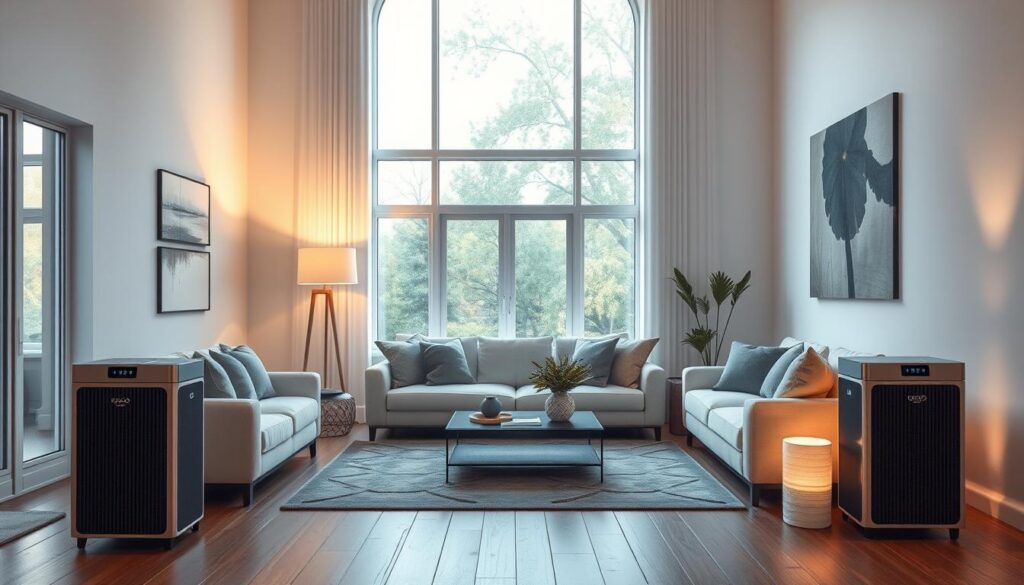
By carefully placing air purifiers in your home, you can make it a healthier place to live. Whether you choose one or several, make sure your home’s layout is well-covered.
Air Purifiers for Specific Needs
Air purifiers have changed to meet different needs, like allergies and pet owners. They are key for homes facing unique air quality issues.
People with allergies find relief in air purifiers for allergies. These have advanced filters, like HEPA, that catch 99.97% of particles. This includes pollen, dust mites, and mold spores.
Pet owners also get help from special air purifiers. Air purifiers for pet owners remove pet dander and smells. This makes the air cleaner and lowers allergy risks.
Choosing the right air purifier is important. If you have pets, look for one with an activated carbon filter for odors. For allergies, a HEPA filter is a must.
Some air purifiers have smart sensors. These sensors check the air and adjust the purifier’s work. This makes the air cleaner for your specific needs.
In short, there’s an air purifier for every need today. Whether it’s for allergies or pet dander, the right one can make your air much better.
Final Thoughts on Air Purifiers
Air purifiers are key to better indoor air, making homes healthier. By learning about the
various air purifiers and their perks, people can pick the best for their space.
Using an air purifier comes with many advantages. It can lessen allergy issues and cut down on harmful pollutants in the air. With the right one, you can enjoy cleaner air, which is good for your health.
Adding air purifiers to your daily routine means breathing cleaner air. This is important for staying safe from air pollutants. As shown, air purifiers do more than just clean the air. They help lead a healthier life.