
The food chain is key to understanding ecosystems. It shows how one organism eats another. This creates a flow of energy from one to the next.
Every living thing, from tiny algae to huge blue whales (Balaenoptera musculus), must eat to live. This shows how all living things are connected in the ecosystem. It highlights the role of each species in nature.
The food chain is essential in nature. It shows how different species depend on each other. It also shows their roles in the environment.
Understanding the Food Chain: An Overview
The food chain is key in ecology. It shows how energy and nutrients move in an ecosystem. It outlines the paths from producers to different levels of consumers.
Organisms in these chains fall into trophic levels. This means their spot in the food chain. We have producers (like plants and algae), primary consumers (herbivores eating producers), secondary consumers (carnivores eating primary consumers), and tertiary consumers (top predators eating secondary consumers).
The energy journey starts with producers, who make their own food. This energy goes to primary consumers when they eat producers. Moving up, energy is passed from one level to the next, but a lot is lost at each step.
Knowing about trophic levels and their interactions is key to understanding ecosystem balance. The balance in an ecosystem depends on the web of relationships between organisms and their environment. Food chains are vital in this balance.
Studying food chains and trophic levels helps us see how ecosystems work. It shows how different species are connected and play roles in keeping the ecosystem in balance.
Producers: The Foundation of the Food Chain
Producers, or autotrophs, form the foundation of the food chain by creating their own nourishment. They are mainly plants and one-celled organisms. They play a key role in the ecosystem. Without producers, the food chain wouldn’t exist as we know it.
Producers are special because they make their own food. They use a process called photosynthesis. This turns sunlight, carbon dioxide, and water into glucose and oxygen.
This process gives energy to the producers. It also sets the stage for energy transfer in the food chain.
Photosynthesis and Chemosynthesis
Most autotrophs use photosynthesis to make food. But some bacteria use chemosynthesis. Chemosynthesis turns chemical energy into biological energy, even without sunlight.
This lets some organisms live in places with little or no sunlight.
The role of producers is huge. They are the main energy source for almost all life on Earth. Learning about producers helps us understand ecosystems and how life is connected.
Primary Consumers: Herbivores in Action
At the heart of the ecosystem are primary consumers, the herbivores that drive the food chain forward. These organisms, which make up the second trophic level, feed on producers (plants and algae). They convert the energy stored in these organisms into a form that can be used by higher-level consumers.
Characteristics of Herbivores: Herbivores vary widely in their characteristics. From tiny insects that feed on plant sap to large mammals like deer and elephants that graze on grasses and leaves. Despite their diversity, all herbivores share the common trait of consuming plant material. This plays a key role in shaping their ecosystems.
Ecosystem Role: The role of herbivores in the ecosystem is multifaceted. They not only consume plant material, influencing vegetation patterns and structure. They also contribute to seed dispersal and nutrient cycling. For example, deer help disperse seeds through their droppings, while their grazing can alter the composition of plant communities.
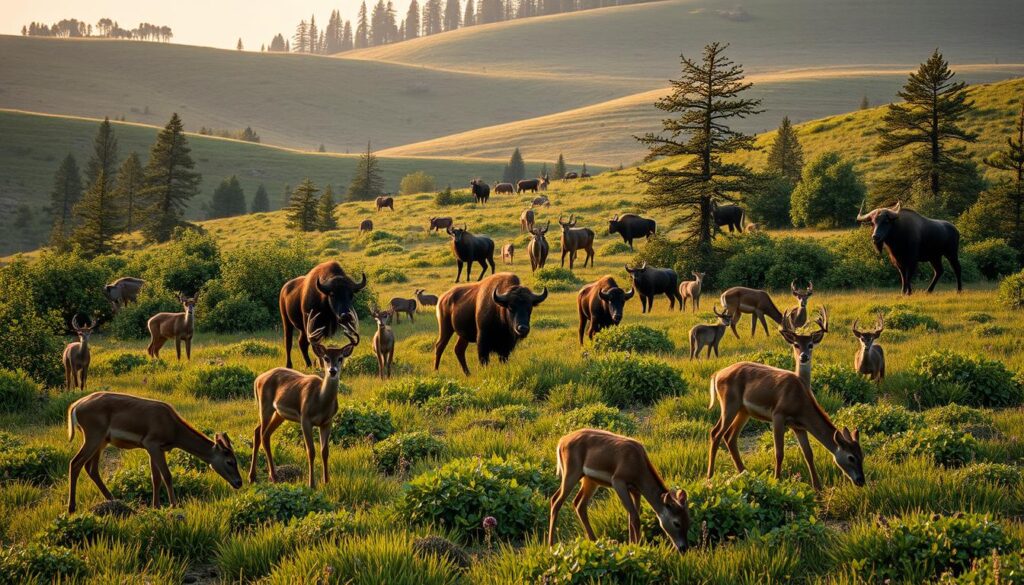
Examples of herbivores include turtles, which feed on aquatic plants, and various bird species that consume seeds, fruits, and vegetation. These primary consumers are essential for maintaining the balance of ecosystems. They show the complex interconnectedness of nature.
By understanding the role of primary consumers, we gain insights into the complex dynamics of ecosystems and the importance of preserving biodiversity. As key components of the food chain, herbivores support the structure and function of ecosystems. This highlights their significance in the natural world.
Secondary Consumers: Carnivores and Omnivores
Secondary consumers, like carnivores and omnivores, are key in the food chain. They eat primary consumers, which are often herbivores. This helps control the numbers of these herbivores.
Their role has a big impact on the ecosystem. By managing primary consumer numbers, they help keep the ecosystem balanced. This balance is important for all living things in the ecosystem.
Carnivores, such as lions and wolves, only eat meat. Omnivores, like bears and humans, eat both plants and animals. This variety makes ecosystems more complex and resilient.
Secondary consumers can be found in many places. In savannas, lions hunt zebras and antelopes. In forests, wolves chase deer. Omnivores, like raccoons, eat fruits and small animals.
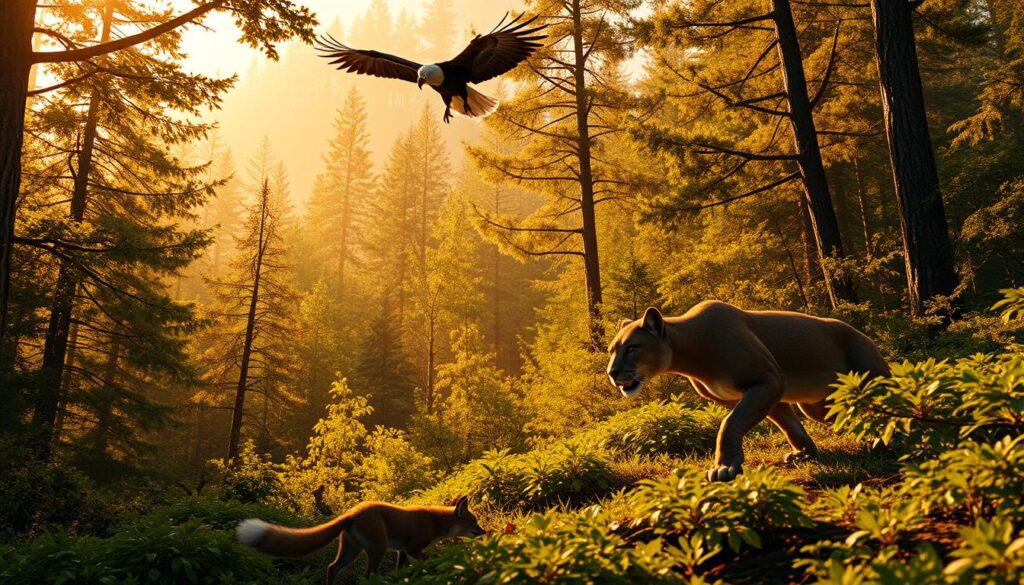
The impact of secondary consumers on their ecosystems is huge. They affect prey populations, which can change vegetation and even other predators’ behavior.
In summary, secondary consumers are vital in the food chain. They connect primary consumers to higher predators. Their actions deeply influence ecosystem dynamics and biodiversity.
Tertiary Consumers: The Apex Predators
Tertiary consumers, also known as apex predators, are at the top of the food chain. They are key to keeping ecosystem balance. These top predators, like lions and sharks, eat secondary consumers. This helps control their numbers and keeps the ecosystem in order.
Apex predators have no natural enemies in their world. Their presence affects the populations of species below them. For example, wolves in Yellowstone change elk grazing habits. This affects plants and riverbanks.

Apex predators do more than control populations. They keep ecosystems healthy. They eat weak animals, keeping prey populations strong. Their actions also change habitats and increase biodiversity.
Examples of Apex Predators
Examples include orcas, eagles, and crocodiles. Each plays a unique role in their ecosystem. This shows how diverse and complex food chains are.
In summary, tertiary consumers or apex predators are essential for ecosystem health. Losing them can cause big changes in ecosystems. This makes conservation efforts to protect them very important.
Decomposers: Nature’s Cleanup Crew
In nature, decomposers are the heroes that recycle nutrients. They keep the ecosystem healthy and thriving. Fungi and bacteria break down dead organic matter into simpler substances. These substances can then be reused by other living things.
The decomposition process is key for ecosystem health. It recycles nutrients back into the soil. This supports the growth of new plants and the entire food chain. Without decomposers, dead plants and animals would pile up, and the soil would lack nutrients for new growth.
Nutrient cycling is another vital function of decomposers. They break down complex organic materials into simpler forms. This makes nutrients available to plants, supporting the base of the food chain. This process helps the ecosystem’s health and soil fertility.
Examples of decomposers include fungi, bacteria, and some insects and worms. Each plays a unique role in decomposition. They all contribute to the overall ecosystem health.
In conclusion, decomposers are vital for nature’s balance. They play a key role in nutrient cycling and breaking down organic matter. This keeps ecosystems productive and healthy. By understanding decomposers, we can better appreciate the web of life and our role in it.
Food Webs: A Complex Picture
Food webs are complex networks of food chains in an ecosystem. They show how different species are connected through who eats whom. This highlights the ecosystem’s complexity and strength.
The complexity of a food web depends on the number of species and their interactions. Ecosystems with more complex food webs tend to be more stable. They have many ways for energy and nutrients to flow. This makes them resilient even if one species is lost.
In a forest, trees and plants are eaten by insects and deer. These herbivores are then hunted by birds, small mammals, and wolves. Decomposers break down dead organisms, recycling nutrients for plants.
Understanding food webs is key to managing ecosystems well. It helps us see how species are connected. This way, we can protect the whole ecosystem, not just individual species.
Human Impact on Food Chains and Ecosystems
Human actions are disrupting the web of life on Earth. Activities like deforestation, pollution, and climate change are changing ecosystems. This leads to problems in food chains.
Ecosystem disruption has big effects, like losing biodiversity and fisheries collapse. For example, overfishing not only reduces fish numbers but also harms predators that eat them.
As Dr. Jane Smith, a renowned ecologist, once said, “The health of ecosystems is intricately linked to human well-being.” This shows why conservation efforts are key to protect ecosystems.
“We do not inherit the Earth from our ancestors; we borrow it from our children.” This Native American proverb emphasizes the need for sustainable practices to save ecosystems for the future.
Conservation efforts, like restoring habitats and protecting wildlife, are vital. By using sustainable practices and reducing our ecological footprint, we can keep nature in balance.
Understanding how humans affect food chains and ecosystems is critical for good conservation strategies. By teaming up, we can safeguard the natural world and keep our planet healthy for the long run.
Conclusion: The Balance of Nature and Food Chains
The balance in nature is key for ecosystems to thrive. It’s important to understand the complex relationships in food chains. This helps us see how different organisms work together.
Food chains show how everything in an ecosystem is connected. They highlight the roles of producers, consumers, and decomposers. Decomposers are vital for recycling nutrients.
Keeping ecosystems in balance is vital for our planet’s health. By understanding food chains, we can see why protecting nature is so important. This helps us preserve the harmony of our ecosystems.