
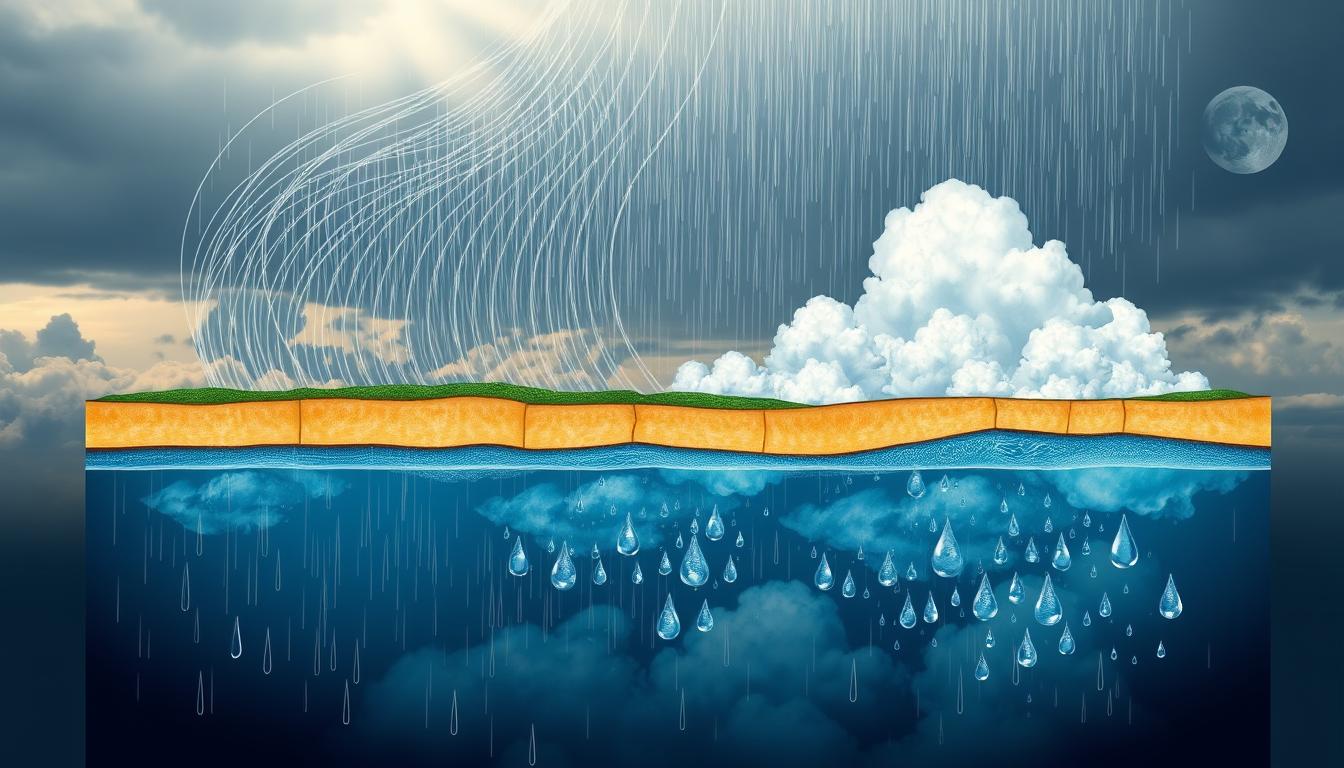
The process of rain formation is key to the Earth’s water cycle. It starts with water droplets forming in clouds.
These droplets grow as they stick together. When they get too heavy, they fall as precipitation.
This process is vital for life on Earth. It spreads freshwater around the planet. Knowing how precipitation works helps us understand the Earth’s water cycle better.
What is Rain and How Does It Form?
To understand rain, we must explore how it forms. This involves cloud condensation and water droplets. Rain starts high up in the sky, where water vapor turns into clouds.
As more water vapor joins these droplets, they grow bigger and heavier. This is key to the rain formation process. Millions of water droplets collide, becoming too heavy to stay in the air.
When clouds are full of water droplets, they start sticking together. This is a critical moment in the rain formation process. It’s when the droplets are too heavy to stay aloft, leading to rain.
The cloud condensation plays a big role in this. Water vapor in clouds turns into liquid droplets when it condenses. When these droplets get too heavy, they fall to the Earth as rain.
Learning about the rain formation process shows us the beauty and complexity of weather. It highlights the balance in our atmosphere and the importance of rain for life on Earth.
Types of Rain: Understanding the Differences
Rain comes in different types, each formed in its own way. Knowing these differences helps us understand weather better.
Convectional, Frontal, and Orographic Rain
Convectional rain starts when the sun warms the Earth. This warmth makes water evaporate and rise as vapor. As it cools, it turns into clouds and falls as rain. This rain is common in warm places.
Frontal rain happens when weather fronts move. These fronts are where air of different temperatures and humidity meet. The meeting of these air masses makes the water vapor in the air condense, leading to rain. This rain is seen in temperate areas.
Orographic rain occurs when air is pushed up by mountains or hills. As it rises, it cools, causing the water vapor to condense. This forms clouds and leads to rain. This rain is important in mountainous regions.
Each type of rain is vital for our climate and weather. By learning about convectional, frontal, and orographic rain, we can see how complex Earth’s water cycle is.
The Science Behind Rain: Atmospheric Changes
Understanding rain science means exploring atmospheric changes. The atmosphere is always changing, reacting with the Earth and the sun. This leads to weather like rain.
How much moisture air can hold is key to rain. Warm air can hold more moisture than cool air. When warm air cools, its moisture turns into rain. This is why some places get more rain than others.
Temperature and Moisture are vital in rain science. Warm, moist air rises and cools. At its dew point, water vapor turns into droplets, forming clouds. These droplets can become heavy and fall as rain.
How different air masses interact affects rain too. For example, when warm, moist air meets cool air, the warm air rises. It cools and condenses, often causing rain. This is a key part of atmospheric changes that shape our weather.
In summary, rain science is closely tied to atmospheric changes, like temperature and moisture levels. Knowing these changes helps us predict the weather and understand our climate.
Weather Patterns That Produce Rain
Many weather patterns, like low-pressure systems and fronts, are key in making rain. They help spread water across the globe and keep life going on Earth.
Low-pressure systems have lower air pressure than around them. This makes the air rise, cool, and turn into clouds and rain. The rising air also pulls in more air, causing strong winds and lots of rain.
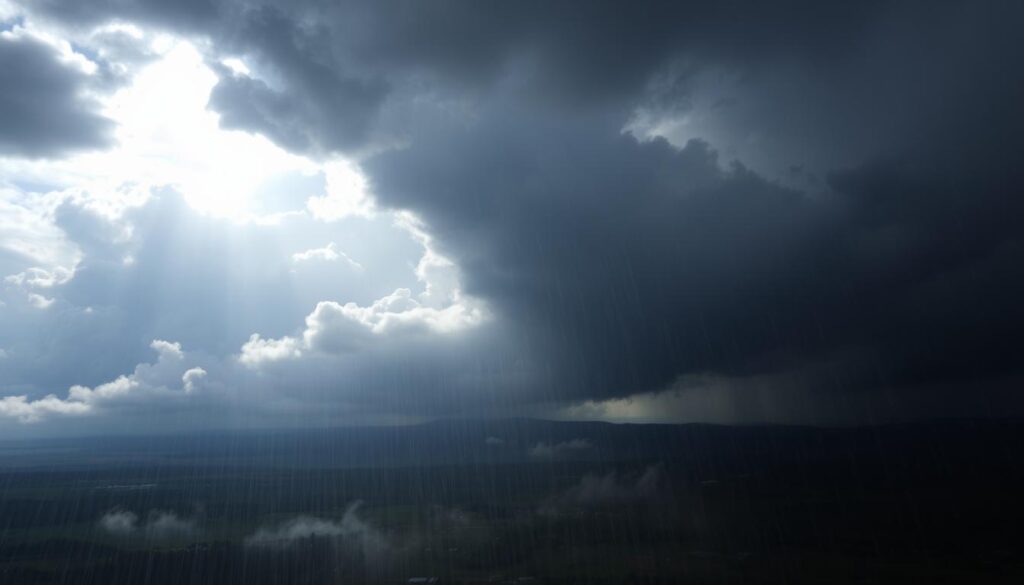
Fronts are also important for rain. They are where two air masses meet, one warmer and one cooler. When a cold front meets a warm one, the air rises, cools, and turns into clouds and rain. This meeting can change the weather a lot, including bringing rain.
“The atmosphere is a complex system, and understanding its dynamics is key to predicting weather patterns, including those that produce rain.”
The mix of weather patterns, like low-pressure systems and fronts, is vital for rain. Knowing these patterns helps meteorologists forecast rain. This helps communities get ready for floods or droughts.
The Journey of Water: From Ground to Sky
The sun’s heat starts the water cycle by making water evaporate. This evaporation turns liquid water from oceans, rivers, and lakes into water vapor. It’s the first step in the water cycle.
Water vapor rises into the air, cools down, and turns back into liquid water. This is called condensation. It forms clouds, which is key for rain.
The water cycle keeps life on Earth going. It’s powered by the sun and involves water in three forms: liquid, solid (ice), and gas (water vapor). Knowing the water cycle helps us understand how rain forms and spreads.
To sum up, water’s journey from the ground to the sky includes evaporation, condensation, and cloud formation. These steps are key to the water cycle. They help shape our weather and where it rains.
Measuring Rainfall: Tools and Techniques
Accurate rainfall measurement is key for weather studies. Tools like rain gauges and radar technology are used. Rain gauges collect and measure rain over time. They come in manual and automatic types for various uses.

Radar technology has changed how we measure rain. It uses radio waves to spot rain and weather. This tech is great for tracking heavy rain and predicting floods.
Rain gauges and radar work together well. Gauges give exact rain amounts at certain spots. Radar shows rain over wider areas. This combo makes weather forecasts and water studies more accurate.
The Environmental Impact of Rain
Rain affects ecosystems and agricultural productivity in many ways.
Rain is vital for life on Earth. It gives us the water needed for healthy ecosystems and agricultural practices. It fills up water sources, helps plants grow, and keeps nature in balance.
But rain isn’t always good. Excessive rainfall can cause flooding, landslides, and soil erosion. This damages both nature and human-made things. On the other hand, deficient rainfall leads to droughts, hurting farms and water supplies.
The impact of rain on agriculture is significant. Rain is key for crops to grow. But too much or too little rain can harm crops, leading to losses for farmers.
In summary, rain’s impact on ecosystems and agriculture is complex. It has both good and bad effects. Understanding and managing these impacts is key to avoiding harm and making the most of rain.
Cultural Significance of Rain
Rain has a deep impact on literature, art, and our daily lives. It’s a theme found across cultures, symbolizing renewal and many emotions. Rain can bring feelings of sadness or joy, depending on the context.
In books, rain is a powerful tool for authors. For instance, in The Great Gatsby by F. Scott Fitzgerald, it shows the turmoil between characters. In Dandelion Wine by Ray Bradbury, rain brings back memories of childhood.
Artists also find rain inspiring, using it to set moods. Andrew Wyeth’s landscapes are often melancholic, while Vincent van Gogh’s city scenes are lively. Rain adds depth and emotion to their work.
Rain also has a big role in human culture, seen as a spiritual renewal. In many places, it’s seen as a blessing, bringing water to dry lands. This is celebrated in festivals and rituals, welcoming rain after dry spells.
Rain’s influence on culture shows its power to shape our experiences and creativity. It’s a symbol that captivates artists and readers alike, carrying personal and universal meanings.
Effects of Climate Change on Rainfall Patterns
Climate change is changing how rain falls worldwide. As the planet gets warmer, rainfall patterns become more unpredictable. This leads to more frequent and severe weather events.
The effects of climate change on precipitation changes are complex. Warmer oceans and a more humid atmosphere can cause intense rainfall in some places. On the other hand, changes in atmospheric circulation can lead to droughts in other areas.
One major consequence is the increased risk of extreme weather. Heavy rainfall can cause devastating floods. At the same time, prolonged droughts can severely affect agriculture and water resources.
Different places are hit in different ways. Some areas see more frequent and intense storms, while others face severe droughts. It’s important to understand these changes to help communities and ecosystems adapt.
By studying rainfall patterns and precipitation changes, scientists can predict future changes. This helps communities prepare for the challenges ahead. Knowing this is key for building resilient infrastructure and managing water effectively.
Staying Safe During Rainy Weather
Staying safe in rainy weather is easy with a few simple steps. Heavy rain can cause flooding and landslides. It’s key to be ready for these dangers.
Precautions to Take
Try to avoid traveling when it’s raining heavily. If you must go out, wear waterproof clothes and sturdy shoes.
Safety Measures
Staying inside is the safest choice when it rains a lot. Watch the weather forecast and sign up for emergency alerts. This way, you’ll know what’s happening outside.
Also, make sure your home is ready for rain. Clear drains and gutters, secure outdoor items, and have an emergency kit ready.
By following these safety measures and watching the weather, you can lower the risks of rainy weather.
Fun Facts About Rain You Might Not Know
Exploring rain reveals many interesting facts that are often missed. Rain is more than just water for our planet; it’s also full of fascinating trivia.
Raindrops come in different sizes and shapes. They’re not always tear-drop shaped, but can be more spherical or irregular. This shape change impacts how we see and measure rain on the ground.
Rain can take many forms, like freezing rain and acid rain. Freezing rain happens when snowflakes melt into raindrops in warm air, then freeze into ice in cold air. Acid rain is caused by pollutants that mix with water and oxygen in the air, making it acidic.
These fun facts about rain show how complex and varied rain can be. From the science behind different rain types to its environmental effects, there’s always more to discover and appreciate about rain.
Conclusion: The Vital Role of Rain in Our Lives
Rain is key to the water cycle, supporting life on Earth and shaping weather. It’s vital to understand rain’s role in keeping our planet healthy. This knowledge helps us see its impact on our lives and the environment.
Rain does many important things, like influencing weather and helping crops grow. It also fills up our water sources. As we face climate change, knowing about rain’s role is essential. It helps us find ways to protect our planet for the future.
By valuing rain’s role, we can better care for our ecosystem. This way, we can preserve it for generations to come.